
Technology
The Ultra-Thin Power Bank Paradox: When Sleek Design Meets Real-World Needs
Magnetic chargers and credit-card-thin batteries are everywhere this fall, but the race to make power banks disappear might be solving the wrong problem.
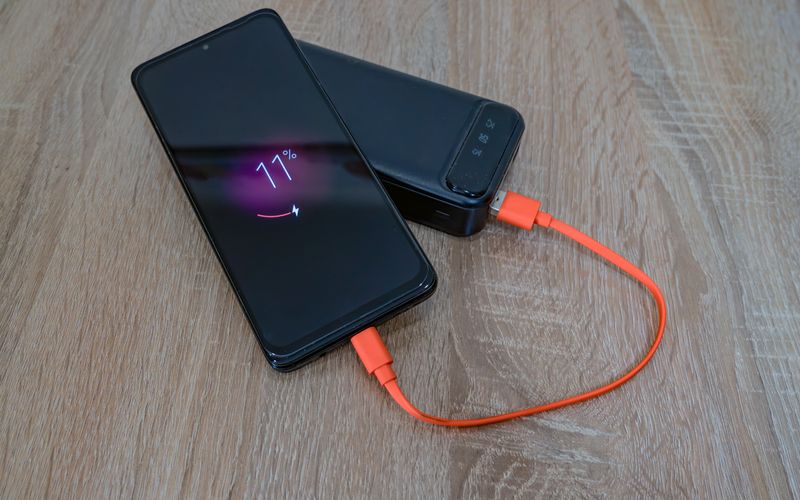
Walk into any tech store this October and you'll see the same trend everywhere: power banks are getting impossibly thin. Credit-card profiles, magnetic snap-on designs, weights measured in grams rather than ounces. The pitch is seductive: portable power that disappears into your pocket, blends with your phone's aesthetic, and feels more like an iPhone case than a battery pack.
The industrial design is impressive. The engineering is legitimate. But the question nobody's asking is whether we're optimizing for the right thing.
The Thinness Wars
The latest generation of ultra-thin power banks represents genuine technical achievement. Manufacturers have pushed lithium polymer cells to their physical limits, shaving millimeters through precision engineering and aggressive material choices. Some of the flagship models launching this month are barely 6mm thick, comparable to two credit cards stacked together.
Magnetic alignment systems borrowed from MagSafe technology let these batteries snap perfectly onto the back of your phone, no cables required. Wireless charging coils eliminate fumbling with connectors. The whole package feels futuristic and clean in a way that traditional chunky power banks never did.
Tech reviewers are predictably enthusiastic. "Finally," they declare, "a power bank that doesn't feel like carrying a brick." Design blogs celebrate the minimalist aesthetic. Influencers post photos of gossamer-thin batteries attached to their phones, marveling at how you barely notice the extra weight.
It's compelling until you look at the capacity numbers.
The Capacity Compromise
Here's the uncomfortable physics: battery capacity correlates directly with volume. Energy density improvements happen slowly, measured in single-digit percentages per year. When you cut thickness in half, you cut capacity proportionally, assuming the same chemistry and form factor.
The ultra-thin magnetic power banks hitting the market this fall typically pack 3,000 to 5,000mAh. For context, a modern flagship smartphone has a 4,500 to 5,000mAh internal battery. That sleek magnetic accessory snapped to your iPhone? It'll give you roughly one additional full charge, maybe 80% if you account for conversion efficiency losses.
One charge. That's the trade-off for the pocket-friendly form factor.
Compare that to a traditional "brick" style power bank. Yes, it's thicker, typically 15-20mm. Yes, it weighs more, usually 300-400 grams versus 100-150 grams for the ultra-thin models. But it also packs 20,000 to 30,000mAh, which translates to four to six full phone charges, or multiple days of moderate use without finding an outlet.
The ultra-thin power bank gives you an evening. The traditional one gives you a weekend.
Who Is This Actually For?
The marketing materials for ultra-thin power banks paint a specific picture: the urban professional who needs a top-up during a long day of meetings, the content creator who's out shooting and needs to keep their phone alive for social posts, the minimalist who values aesthetics and will tolerate the capacity trade-off for the sake of a clean setup.
These are real use cases. They're just narrow use cases.
What about the traveler who's on a 12-hour flight with no seatback power? What about the field technician who's away from outlets for an entire shift? What about the outdoor photographer who needs to power a camera, drone, phone, and backup lighting over a multi-day shoot?
The ultra-thin power bank fails spectacularly in these scenarios, not because it's poorly designed but because it's optimized for a different problem. The thinness that makes it convenient to carry becomes irrelevant when you need to carry three of them to have sufficient capacity, at which point you're carrying more volume and weight than a single high-capacity unit.
The math doesn't lie: Three 5,000mAh ultra-thin power banks (450 grams total, 40-60). The thin ones take up more pocket space when you account for three separate devices.
This is the paradox at the heart of the ultra-thin trend: solving for portability by reducing capacity often makes the solution less portable in practice, because you need multiples to meet real-world demands.
The Magnetic Charging Question
Wireless charging through magnetic alignment is undeniably elegant. No cables to manage, no connectors to wear out, no orientation guessing. The power bank clicks into place, charging begins automatically, and everything feels seamless.
Until you consider the efficiency cost.
Wireless charging inherently wastes energy. The conversion from battery to electromagnetic field to receiving coil to battery chemistry loses 20-30% of the power as heat. That 5,000mAh magnetic power bank? It's effectively a 3,500-4,000mAh unit by the time the energy actually reaches your phone's battery.
Cable-based charging is 85-95% efficient. The energy loss is minimal, the heat generation is low, and the charging speed is faster. A 5,000mAh power bank with a USB-C cable delivers closer to 4,500mAh of usable capacity.
The convenience of magnetic attachment is real. But when you're already working with limited capacity, losing an additional 25% to wireless inefficiency is a steep price.
Some manufacturers try to split the difference by including both wireless charging and a USB-C port. Use the magnetic attachment for convenience when you're at a coffee shop and need a casual top-up. Switch to cable when you're actually depleted and need maximum speed and efficiency. It's a reasonable compromise, but it also undermines the "cable-free" simplicity that was the whole point.
Design Language vs. Functional Design
The ultra-thin power bank trend reflects a broader tension in consumer electronics: the prioritization of design language over functional design.
Design language is about aesthetics, brand identity, and emotional appeal. It's what makes a product photogenic, what drives aspirational marketing, what gets people to pay premium prices. Apple mastered design language decades ago. The entire industry has been chasing that same magic ever since.
Functional design is about solving the problem the product exists to address. For a power bank, that problem is: provide portable electrical energy when grid power isn't available. Functional design asks how much capacity is sufficient, how quickly it charges devices, how durable it is, how many charge cycles it survives, how well it performs in temperature extremes.
The best products balance both. The ultra-thin power banks, by and large, optimize heavily for design language and compromise on functional design.
They look fantastic in product photography. They feel premium in hand. They integrate beautifully with modern smartphone aesthetics. And they run out of juice halfway through the day you actually needed them.
The Real Innovation Is Elsewhere
While the ultra-thin magnetic power banks dominate headlines and Instagram feeds, the more interesting innovation is happening in less photogenic territory.
Gallium nitride (GaN) charging technology has enabled power banks that combine high capacity with genuinely compact size. A 20,000mAh power bank using GaN components can be 30% smaller than an equivalent model using traditional silicon-based charging circuitry, without sacrificing capacity. It's not credit-card thin, but it fits comfortably in a jacket pocket and provides multi-day power.
Fast-charging protocols have reached the point where a 100W USB-C Power Delivery port can charge a laptop, tablet, phone, and accessories simultaneously from a single power bank. The convenience isn't about wireless magnetic attachment; it's about one device powering your entire mobile setup.
LiFePO4 (lithium iron phosphate) chemistry, which VoltPak uses in our power stations, offers dramatically longer cycle life than the lithium polymer cells in ultra-thin power banks. A typical LiPo cell degrades noticeably after 300-500 charge cycles. LFP cells maintain 80% capacity after 3,000+ cycles. Over a five-year lifespan, that difference is enormous.
Modular power systems let users scale capacity based on actual need. Start with a base unit for daily use, add expansion batteries for extended trips. It's less elegant than a single ultra-thin slab, but it's infinitely more versatile.
These innovations don't photograph as beautifully as a magnetic power bank stuck to a rose gold iPhone. But they solve real problems for people who actually depend on portable power rather than occasionally supplementing it.
When Thin Makes Sense
To be clear: ultra-thin power banks aren't bad products. They're great products for specific contexts.
If your primary use case is a safety net (phone dies during a night out, need enough juice to call a ride home), thin and light makes perfect sense. If you're religious about charging overnight and only occasionally encounter situations where you run low during the day, the capacity constraint is manageable. If aesthetics genuinely matter to you and you're willing to pay the capacity cost, that's a valid choice.
The problem is when these devices are marketed as universal solutions, when reviewers test them in ideal conditions and declare them "game-changers," when users buy them expecting the same multi-day capacity they got from their old power bank and discover the hard way that thinness came at a steep functional cost.
Thin makes sense when the constraint is truly pocket space and weight, when capacity needs are genuinely modest, and when frequent access to wall power makes true backup power unnecessary.
For everyone else, it's a solution in search of a problem.
The VoltPak Philosophy
We built the VP8000H around a different set of priorities.
Portability matters, but not at the expense of capacity. Our design target was: what's the maximum energy storage we can deliver in a form factor that's still genuinely movable by one person? The answer was 8,000Wh in a package with built-in handles and rolling wheels.
Nobody's calling it ultra-thin. Nobody's snapping it magnetically to their phone for aesthetic Instagram photos. But the person running a mobile office from a van, the contractor powering tools at a remote job site, the family keeping essentials running during a grid outage? They're not looking for thin. They're looking for capacity they can depend on.
Our design language serves the function. Rugged construction because portable power stations get moved, bumped, and used in imperfect environments. Clear capacity indicators because you need to know what you have available. Multiple output types (USB-C, USB-A, AC outlets, DC barrel jacks) because real-world power needs are diverse.
It's not minimalist. It's not trying to disappear. It's trying to solve the problem comprehensively.
The Honest Market
Here's what the portable power market needs: honest segmentation.
Ultra-thin magnetic power banks should be marketed as supplemental charging accessories for light daily use. They're excellent at what they do, which is provide a convenient top-up without bulk. Pretending they're replacements for high-capacity power banks sets false expectations.
Mid-capacity power banks (10,000-20,000mAh) are the sweet spot for most people most of the time. Enough capacity for a full day or two of moderate use, compact enough for everyday carry, affordable enough to be accessible. This is the category where the capacity-to-size ratio makes the most sense.
High-capacity power stations (50,000mAh and up, into the kilowatt-hour range) are for serious mobile power needs. They're not everyday carry. They're infrastructure for specific situations where grid power is unavailable or unreliable. Trying to make them pocketable is the wrong goal.
Each category serves real needs. The confusion happens when marketing blurs the lines, when a 3,000mAh magnetic battery is positioned as a travel essential, when a 100-pound power station is called "portable" in the same breath as a device that fits in your palm.
Honest marketing matches product capability to use case without overselling or underselling.
What Users Actually Need
The fundamental question isn't "how thin can we make a power bank?" It's "how much power do people actually need in mobile contexts, and what's the most effective way to deliver it?"
For most smartphone users with typical daily patterns, the answer is probably 10,000-15,000mAh of capacity in a form factor that fits in a small bag. Not pocket-thin, but genuinely portable. With both wireless and wired charging for flexibility. With enough capacity to fully recharge the phone 2-3 times, which covers unexpected heavy use or a full day away from outlets.
For laptop users, mobile professionals, and digital nomads, the answer is 20,000-30,000mAh with high-wattage USB-C Power Delivery. Enough to recharge a laptop once or twice, keep accessories topped up, and provide multi-day phone power. The weight is higher (500-800 grams), but it's carried in a backpack alongside the laptop and other work gear, so the incremental burden is minimal.
For off-grid scenarios, remote work, emergency preparedness, and extended outdoor activities, the answer is measured in hundreds or thousands of watt-hours, delivered through a device that prioritizes capacity and durability over pocketability.
The ultra-thin power bank serves none of these needs optimally. It's a niche product pretending to be mainstream.
The Next Evolution
Five years from now, portable power will look different. Battery chemistry will improve incrementally. Solid-state batteries might reach commercial viability, offering 30-50% higher energy density. Fast-charging will get faster. Wireless charging efficiency will improve.
But the fundamental physics won't change. Energy storage requires volume. Higher capacity means more cells. More cells mean more weight and size. The trade-offs will soften, but they won't disappear.
The products that win won't be the thinnest. They'll be the ones that honestly match capacity to use case, that prioritize what users actually need over what photographs well, that deliver reliable performance in real-world conditions rather than ideal lab testing.
They'll be the products built by companies that ask "what problem are we solving?" before asking "how thin can we make it?"
VoltPak is betting on that approach. Not because we're opposed to elegant industrial design (we're not), but because we believe the best design serves the function rather than fighting it.
Thin is good when thin solves the problem. When it doesn't, it's just marketing.
Choosing What Matters
If you're in the market for portable power, ignore the thinness wars. Ask yourself:
How much capacity do I actually need? Be honest about your usage patterns. A weekend camping trip requires different capacity than a daily commute.
How am I carrying this? Pocket carry means weight and thickness matter enormously. Backpack carry makes those factors much less critical.
How often will I use it? Daily use justifies premium features and build quality. Occasional emergency backup doesn't.
What am I powering? A phone has different requirements than a laptop, camera gear, or medical devices.
What's my budget? Capacity costs money. Wireless charging costs money. Brand names cost money. Decide what features you're actually willing to pay for.
The ultra-thin magnetic power bank might be exactly right for your needs. Or it might be an expensive compromise that leaves you frustrated when you actually need portable power.
The way to know is to match the product to the problem, not the marketing to the aesthetic.
And if what you need is real capacity in a genuinely portable package, that exists too. It just doesn't look like a credit card.
It looks like infrastructure. And infrastructure is what makes everything else possible.
Related reading: sizing a power station for home backup and why we chose LFP.