
Technology
Smart Rings: The Quiet Revolution in Wearable Tech
Why the world's lightest wearables are giving smartwatches a run for their money, and what it means for battery-powered devices.
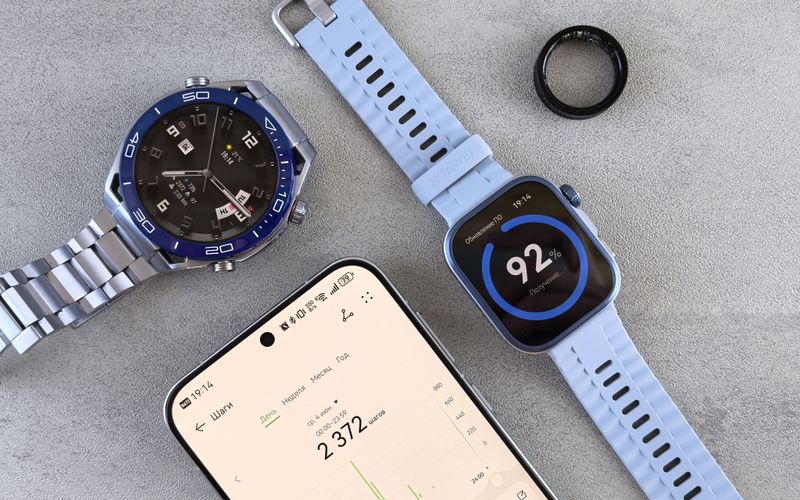
The fitness tracker on your wrist is about to get some serious competition from your finger.
Smart rings emerged from the fringes of wearable tech in late 2024, but by October 2025, they've become one of the fastest-growing categories in consumer electronics. The Oura Ring, Samsung Galaxy Ring, and newcomers like the Noise Luna Ring Gen 2 aren't just novelties. They're redefining what we expect from health tracking devices. And the secret sauce? It's all about power efficiency, sensor miniaturization, and a design philosophy that puts discretion first.
Why Rings? Why Now?
Smartwatches have dominated wearables for over a decade. They're capable, feature-rich, and increasingly sophisticated. But they also come with a trade-off: bulk. Even the slimmest Apple Watch or Garmin requires daily charging, constant screen interactions, and a certain level of… conspicuousness.
Smart rings flip the script. Here's what makes them compelling:
Battery Life That Actually Lasts
The best smart rings deliver 4 to 7 days of continuous tracking on a single charge. Compare that to the 18-hour cycle of most smartwatches, and you see the appeal. The Oura Ring Gen 4, for example, packs a tiny lithium-polymer cell that sips power thanks to ultra-low-power sensors and intermittent data sync over Bluetooth LE.
For VoltPak, this matters. The same battery chemistry principles that govern our portable power stations (balancing capacity, cycle life, and thermal management) apply at microscale in these devices. Efficient energy use isn't just a feature; it's the entire design constraint.
Discreet Health Monitoring
You don't glance at a ring. You wear it and forget it. That's the point.
Modern smart rings track:
- Heart rate variability (HRV) for stress and recovery insights
- Continuous SpO2 (blood oxygen levels)
- Skin temperature trends to detect early signs of illness or cycle changes
- Sleep stages using accelerometer and PPG (photoplethysmography) sensors
The Samsung Galaxy Ring even includes body temperature-based fertility tracking, a feature that requires days of stable baseline data (something you're more likely to get from a device you never take off).
AI-Powered Insights Without Subscriptions (Mostly)
Here's where it gets interesting. Oura popularized the subscription model for wearable insights at $5.99/month after the first month, but competitors are pushing back. Samsung bundles its Ring with Galaxy phones at no extra cost for data analysis. Noise's Luna Ring offers AI-driven health scores without recurring fees.
The AI lives on your phone, crunching biometric data to deliver readiness scores, activity recommendations, and sleep quality breakdowns. It's predictive health monitoring, scaled down to a 4-gram device.
The Engineering Challenge: Power vs. Performance
Building a smart ring is an exercise in extreme miniaturization. You're cramming sensors, a battery, a Bluetooth radio, and processing logic into a form factor smaller than a AAA battery.
Here's what manufacturers are wrestling with:
Battery Capacity
Most smart rings use 15-30 mAh cells, tiny compared to the 300+ mAh in a smartwatch. To stretch this, engineers optimize:
- Duty cycling: Sensors activate intermittently, not continuously
- Low-power MCUs: ARM Cortex-M series chips that idle at microamps
- Efficient wireless: BLE 5.2+ with extended advertising for minimal radio-on time
Sensor Selection
Not all sensors are created equal. Smart rings prioritize:
- PPG heart rate sensors (green or infrared LEDs + photodiodes)
- 3-axis accelerometers for motion and sleep stage detection
- NTC thermistors for skin temperature (far more efficient than infrared)
What they skip: GPS, cellular connectivity, always-on displays. These would obliterate battery life.
Thermal Management
Your finger is warm. That heat affects battery chemistry and sensor accuracy. Ring designers use thermal isolation layers and adaptive algorithms to compensate for body heat during workouts or sleep.
At VoltPak, we think a lot about portable energy. Our VP-8000H power station delivers 8,000Wh to run a fridge or charge laptops during an outage. A smart ring delivers 100μWh per hour to track your pulse. The scale differs, but the principles don't: efficient chemistry (LFP in our stations, Li-Po in rings), thermal awareness, and user behavior that demands "set it and forget it" power.
What's Next for Smart Rings?
The category is evolving fast. Here's what industry watchers expect by late 2026:
Gesture Control
Imagine answering a call by tapping your thumb and index finger together. Ultrahuman and Movano are working on EMG (electromyography) sensors that detect muscle signals for gesture input.
Payment Integration
NFC-enabled rings (like the McLear RingPay) already exist, but expect mainstream adoption as Samsung and Apple explore ring-based contactless payments.
Glucose Monitoring
Non-invasive blood glucose tracking is the holy grail of wearables. Several startups claim breakthroughs using optical sensors and AI inference, though FDA approval remains the bottleneck.
Longer Battery Life
Solid-state batteries could double runtime without increasing size. QuantumScape and others are racing to commercialize this tech by 2027-2028.
The Bigger Picture: Wearables Go Invisible
Smart rings aren't replacing smartwatches. They're carving out a parallel niche for people who want passive, continuous health data without the friction of screens and charging cables.
For the electronics industry, it's a case study in extreme energy efficiency. Every milliamp-hour counts. Every sensor decision is a trade-off. And the result? Devices that disappear into daily life while quietly gathering insights that used to require hospital visits.
At VoltPak, we're watching this space closely. The same engineering rigor that makes a ring work for a week on 30mAh is what drives our obsession with every watt-hour in our power stations. Whether you're tracking REM sleep or keeping the lights on during a storm, energy is the enabler.
Related reading: why we chose LFP and sizing a power station for home backup.