
physical AI
Physical AI Is Leaving the Lab: Why Embodied Intelligence Demands a Power Revolution
From warehouse robots to autonomous delivery drones, AI is moving from screens into the physical world. But embodied systems consume 0.5-3 kW continuously, creating infrastructure demands that make portable power the defining constraint on deployment at scale.
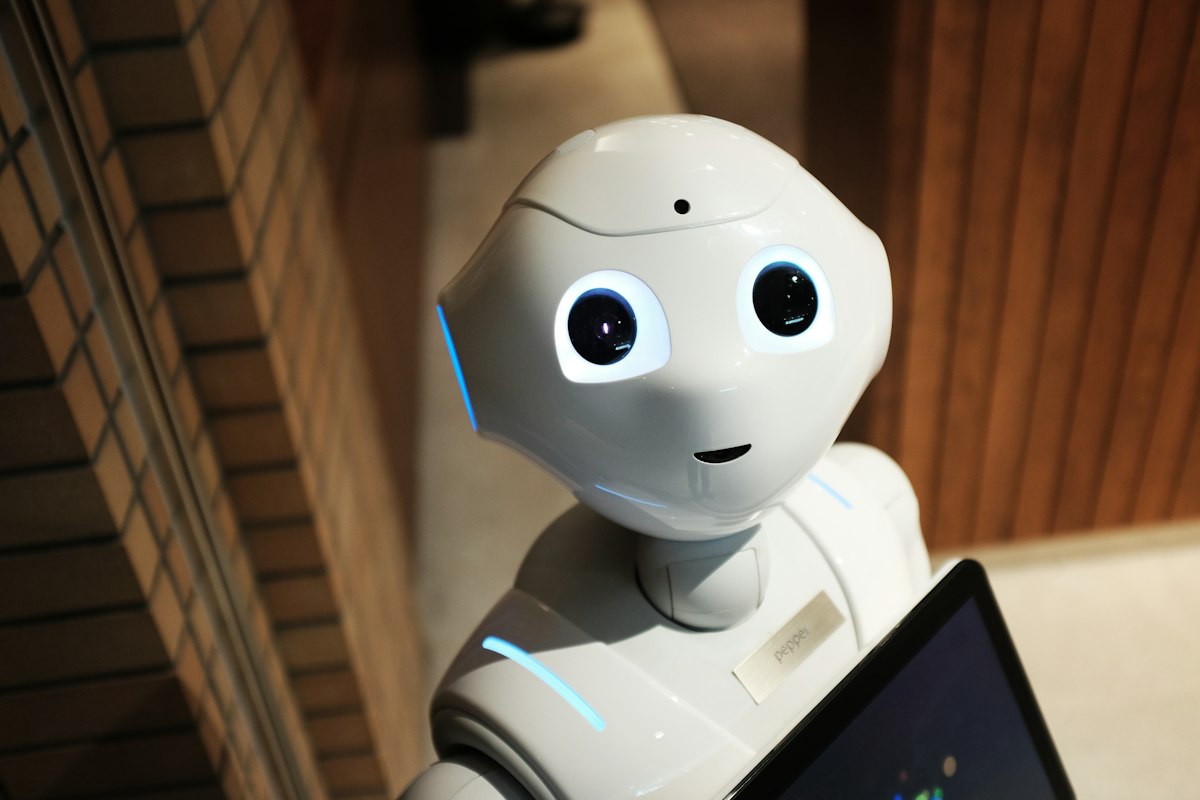
The World Robotics Conference in Beijing this September marked a turning point that went largely unreported in mainstream tech coverage: Physical AI is no longer a research project. It's entering volume deployment across agriculture, logistics, healthcare, construction, and household services. More than 380,000 industrial robots are already operating in U.S. facilities alone, and that number is projected to reach 2 million by 2028.
But there's a constraint that's become impossible to ignore. Every one of these systems, whether it's a warehouse AMR (autonomous mobile robot), a field inspection drone, or a robotic surgical assistant, shares a fundamental requirement that software-only AI doesn't: continuous, reliable, portable electrical power.
Physical AI isn't ChatGPT on wheels. It's embodied intelligence operating in the physical world, where physics, energy density, and power distribution become the hard limits on what's possible. And the power requirements are staggering in ways the industry is only beginning to confront.
What Physical AI Actually Means
The term "Physical AI" describes systems that integrate perception, decision-making, and physical action in real time. Unlike software AI that processes data in cloud data centers or on your phone, Physical AI operates in environments where:
- Latency matters at millisecond timescales (a drone correcting for wind gusts)
- Energy must be carried rather than transmitted (a delivery robot on a 10-hour route)
- Failure has physical consequences (a surgical robot that loses power mid-procedure)
Think of it as the difference between an AI that can describe how to pick up a glass versus a robot arm that can actually grip it, lift it, and pour water without spilling. The latter requires motors, sensors, actuators, compute running locally, and continuous power delivery to all of those subsystems simultaneously.
NVIDIA's introduction of standardized safety frameworks for Physical AI (codenamed Halos) in October 2026 was essentially an admission that embodied systems are ready for deployment outside controlled lab environments. Companies are trialing humanoids in warehouses without permanent safety barriers. Robotaxi programs are scaling beyond geofenced test zones. Construction robots are operating on active job sites.
The technology works. But making it work reliably for 8-12 hour operational windows, in environments where grid power isn't available or practical, is exposing the gap between laboratory capability and field deployment readiness.
The 0.5-3 kW Problem
Here's the number the robotics industry is quietly wrestling with: Physical AI systems in practical deployment consume between 0.5 kW and 3 kW continuously, depending on form factor, mobility requirements, and computational load.
That's not idle standby power. That's sustained operational demand, hour after hour.
A warehouse AMR navigating autonomously, avoiding obstacles, and coordinating with other robots might draw 800W continuously. An agricultural inspection drone flying transect patterns over row crops pulls 1.2 kW. A mobile manipulation robot in a fulfillment center, running vision models, planning grasps, and actuating motors, can hit 2.5 kW during active operation.
For context, that's 2-6x the power consumption of a high-performance laptop running local AI. It's 20-60x the power draw of a smartphone. It's a fundamentally different energy regime, and it requires portable power infrastructure that hasn't existed at scale until recently.
Energy Scale Reality Check: A single Physical AI robot operating at 1.5 kW for an 8-hour shift consumes 12 kWh. That's roughly equivalent to running three households for a day, or driving an electric vehicle 40 miles. Multiply that by thousands of robots per facility, and the infrastructure requirements become staggering.
The challenge compounds when you consider that these aren't stationary systems tethered to the grid. They're mobile by definition. Warehouse robots can't drag power cables. Delivery drones can't land every 30 minutes for grid charging. Field robots operating in agriculture can't rely on extension cords strung across crop rows.
Physical AI requires portable power at scales that consumer electronics never prepared us for.
Battery Mass Versus Mission Duration
The fundamental constraint is energy density. Lithium-ion batteries, the best we have for mobile applications, store roughly 250 Wh/kg at the cell level. By the time you account for pack housing, thermal management, and battery management electronics, you're looking at 180-200 Wh/kg at the system level.
Now do the math for a robot that needs to operate for 8 hours at 1.5 kW average power draw:
- Total energy required: 12 kWh
- Pack mass at 180 Wh/kg: 67 kg (148 lbs)
That's before you add the robot's structural mass, motors, compute, sensors, and payload capacity. For context, Boston Dynamics' Atlas robot weighs 89 kg total. Two-thirds of that mass budget would be battery alone to achieve 8-hour runtime at high power.
You can see the problem. Mobile robots need to move efficiently, which means minimizing mass. But achieving useful mission duration requires carrying substantial battery capacity, which adds mass. The tension between these requirements is why most deployed Physical AI systems today operate on 2-4 hour duty cycles with dedicated charging infrastructure.
But 2-4 hour cycles create their own problems:
Infrastructure cost: Every charging station is capital expense and real estate. A fulfillment center with 200 AMRs operating on 3-hour cycles needs 50-60 charging points to keep the fleet operational.
Downtime: Robots spend 20-30% of their operational window charging rather than performing useful work. That's inefficiency you're paying for in robot count.
Charging speed: Fast charging to minimize downtime means high power delivery (20-40 kW per robot), which requires upgraded electrical service and sophisticated load balancing.
The economics get better with longer duty cycles, but that requires either higher energy density batteries (not available at scale yet) or accepting heavier robots with reduced payload capacity.
Solid-State Promises, LFP Reality
The robotics industry is watching solid-state battery development closely. A technology that could deliver 400-500 Wh/kg at the pack level would transform the economics of Physical AI by halving battery mass for equivalent runtime. But volume production keeps slipping. QuantumScape, Solid Power, and others are demonstrating cells, but scaling to the tens of thousands of packs needed for commercial robot fleets remains years away.
In the meantime, deployments are standardizing on LFP (lithium iron phosphate) chemistry for reasons that mirror our own choice at VoltPak:
Cycle life: 3,000-5,000 cycles versus 500-1,000 for NMC lithium-ion. A warehouse robot charging twice daily hits 730 cycles per year. LFP packs last 4-6 years in service versus 1-2 years for NMC.
Thermal stability: Physical AI robots operate in environments with poor climate control (warehouses, outdoor agriculture, construction sites). LFP's thermal tolerance reduces fire risk and simplifies thermal management.
Cost per cycle: Even though LFP has lower energy density (160 Wh/kg vs 200 Wh/kg for NMC), the longer cycle life makes it cheaper over the robot's operational lifetime. Total cost of ownership matters more than upfront pack cost.
The energy density penalty is real, but it's manageable when balanced against reliability and operating cost. Robots get slightly heavier or runtime decreases modestly, but the packs don't fail catastrophically and don't need replacement every 18 months.
Charging Infrastructure Economics: A fleet of 100 robots operating 16 hours/day in two shifts requires approximately 1,200 kWh of daily energy delivery. That's 50 kW average continuous load, equivalent to 40 U.S. homes. The charging infrastructure, not the robots themselves, often becomes the limiting factor on fleet scaling.
The Portable Power Opportunity
Here's where the Physical AI story intersects directly with VoltPak's mission: the line between "robot battery" and "portable power station" is blurring fast.
Consider these emerging use cases:
Field service robots deployed to remote infrastructure sites (cell towers, pipelines, renewable energy installations) where grid power isn't available. These systems need multi-hour runtime plus the ability to recharge from portable power stations that can be truck-deployed.
Emergency response robots for disaster scenarios where the grid is down. These need battery swapping capability or high-power DC fast charging from generator-backed portable power infrastructure.
Construction and agriculture robots operating across large sites where running grid power to every operational zone isn't economically viable. Mobile charging stations that can be repositioned as work progresses become critical infrastructure.
Delivery robots and drones in last-mile logistics need distributed charging infrastructure. Rather than fixed charging points, some operators are deploying battery swap stations that are essentially portable power banks optimized for robotic form factors.
The robots themselves are getting smarter, but they're also getting hungrier for power. The infrastructure to keep them operational is converging on high-capacity, mobile power delivery systems that can support 1-5 kW continuous output, 10-20 kWh of stored energy, and rapid charge/discharge cycling.
That's not a consumer power bank. That's portable power infrastructure, designed with the same reliability and performance standards as grid equipment but without the assumption of fixed installation.
When AI Moves, Power Must Follow
Physical AI is already changing industries in ways that are largely invisible to consumers. Warehouses are faster and more space-efficient because robots can operate in aisles too narrow for forklifts. Precision agriculture is reducing pesticide use by 40-60% because robots can identify and treat individual plants. Inspection tasks that were too dangerous or expensive for humans are now economically viable with drones and climbing robots.
But every one of these deployments is ultimately constrained by power infrastructure. Robot capability is advancing faster than energy storage and delivery systems. The gap is widening.
Solid-state batteries might close that gap eventually, but "eventually" is 2029-2031 at earliest for volume production. In the meantime, Physical AI deployment at scale requires rethinking how we deliver electrical energy to mobile systems that can't tether to the grid.
This is a different problem than powering laptops or phones. It's closer to the challenges of electrifying transportation: high power, long duration, harsh environments, and economic pressure to minimize downtime.
The companies solving this aren't the ones building better robot navigation algorithms. They're the ones building portable power infrastructure that can support continuous 2-5 kW loads for 8-12 hours, survive thousands of charge cycles, and integrate with robot charging protocols that don't yet have industry standards.
At VoltPak, we see Physical AI not as a distant future but as an immediate infrastructure challenge. Robots are deploying now. They need power now. The question isn't whether portable power infrastructure is necessary. It's whether it can scale fast enough to match robot deployment timelines.
We're building for that world. Because intelligence is going mobile, and mobile intelligence runs on batteries.
The robots are ready. The power infrastructure is the bottleneck. And that bottleneck is solvable today with the right technology choices and sufficient engineering focus.
The AI revolution isn't confined to data centers anymore. It's moving into warehouses, fields, hospitals, and streets. And everywhere it moves, it needs power that moves with it.
That's the challenge. That's the opportunity. And that's what we're here to deliver.
Related reading: humanoid robots portable power and edge AI portable power revolution.