
humanoid robots
Humanoid Robots Are Here: Why Portable Power Is the Real Bottleneck to Mass Deployment
Tesla Optimus, Figure AI, and others are shipping commercial humanoid robots in 2026. But battery runtime, charging infrastructure, and power density remain the critical constraints preventing widespread adoption.
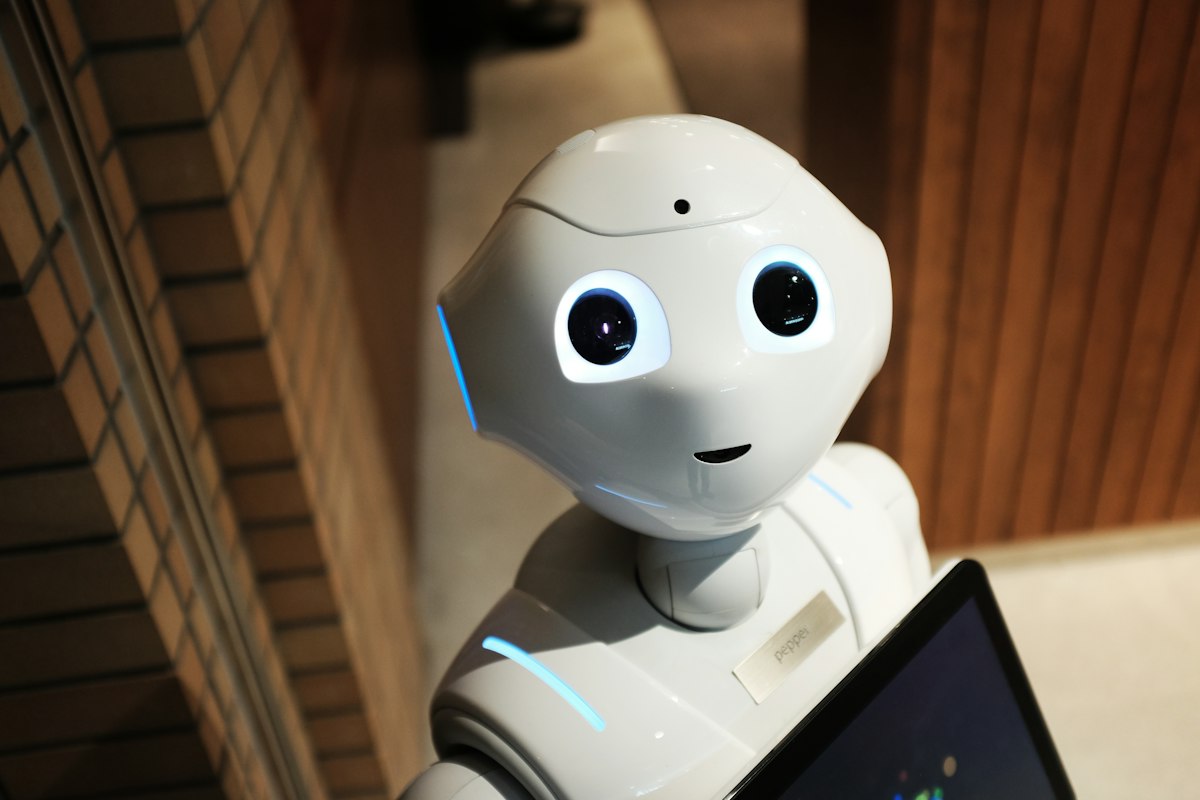
Walk into any tech conference in 2026 and you'll see them: humanoid robots navigating crowds, demonstrating object manipulation, and occasionally stumbling over unexpected obstacles. Tesla's Optimus, Figure AI's Figure 02, and a dozen Chinese competitors are no longer prototypes in controlled labs. They're shipping to customers, working in warehouses, and beginning pilot programs in healthcare facilities.
The humanoid form factor makes intuitive sense. Human environments are designed for human bodies. Doorways, stairs, shelves, and tools all assume roughly human proportions and capabilities. A robot that can navigate these spaces and use existing infrastructure is more versatile than purpose-built alternatives.
But there's a problem that every robotics company is grappling with: batteries. Specifically, how do you pack enough energy into a human-sized robot to enable useful work without making it too heavy, too expensive, or too dangerous?
At VoltPak, we've spent years optimizing portable power for demanding mobile applications. The challenges facing humanoid robotics in 2026 are a masterclass in why power density, thermal management, and fast charging matter.
The Energy Budget of a Humanoid Robot
Unlike industrial robot arms that stay plugged into wall power, humanoid robots must carry their energy with them. Let's break down where that energy goes:
Locomotion: Walking is energetically expensive. A 60kg humanoid robot navigating a warehouse might consume 100-200W just for movement, depending on terrain and speed. Running or climbing stairs can spike power consumption to 500W or more.
Computation: Modern humanoid robots run sophisticated AI models for vision, planning, and control. NVIDIA's Jetson AGX Orin or similar edge AI processors can draw 15-60W under load. Add multiple cameras, LIDAR, and other sensors, and the perception stack alone might consume 80-100W.
Actuation: Servo motors controlling 30+ joints require continuous power. Even holding a pose against gravity requires motor torque, which means energy consumption. Picking up a 5kg object might briefly spike power draw by 100-200W.
Thermal management: All this power consumption generates heat. In a compact humanoid form factor, active cooling (fans or liquid cooling) might add another 20-50W.
Add it up and you're looking at 200-400W of continuous power consumption during active work, with peaks potentially exceeding 800W during demanding tasks. For comparison, that's roughly equivalent to running 3-6 laptops simultaneously.
Runtime Math: A humanoid robot consuming an average of 300W needs 3kWh of battery capacity to operate for 10 hours. At current lithium-ion energy densities (around 250 Wh/kg for good cells), that's 12kg of battery mass, not counting the protective enclosure and battery management system. For a robot targeting 60kg total mass, batteries represent 20% of the weight budget.
The Mass-Capacity Tradeoff
Every kilogram of battery adds to the robot's mass, which increases the energy required for movement, which requires more battery capacity, which adds more mass. It's a vicious cycle that robotics engineers know well.
Tesla's Optimus Gen 2, unveiled in late 2025, reportedly masses around 73kg with a 2.3kWh battery pack. That gives it roughly 5-8 hours of runtime depending on workload, which is acceptable for warehouse shifts but problematic for continuous operation scenarios.
Figure AI's Figure 02 takes a different approach, using a modular battery system that allows mid-shift swapping. The robot carries a primary 2kWh pack good for 4-6 hours, with the option to swap in a fresh pack in under 60 seconds. This works for structured environments like factories but becomes logistically complex for unstructured settings.
Chinese manufacturer Unitree's H1 humanoid pushes mass down to 47kg but sacrifices battery capacity, achieving only 3-4 hours of runtime. It's a reasonable tradeoff for research applications but limits commercial utility.
The fundamental constraint is energy density. Until battery technology dramatically improves, humanoid robots will carry substantial mass in their torsos, affecting balance, agility, and efficiency.
Fast Charging: The Other Critical Variable
If robots can't run all day on a single charge, how quickly can they recharge? This becomes critical for commercial viability.
Standard lithium-ion cells accept charge rates of 0.5C to 1C (where C is the capacity in amp-hours). For a 2kWh pack, that's 1-2kW charging power, meaning 1-2 hour recharge times. That's painfully slow for commercial deployments expecting 90%+ uptime.
Fast charging at 2C or higher is possible but creates several challenges:
Heat generation: Rapid charging generates significant heat that must be dissipated without damaging cells. A 2kWh pack charging at 4C (8kW) might generate 500-800W of waste heat. In a compact robot torso, that heat has nowhere to go without active liquid cooling.
Battery degradation: Aggressive fast charging accelerates capacity loss. A pack charged at 2C might lose 20% capacity after 500 cycles, compared to 1000+ cycles at 0.5C. For a robot charging twice per day, that's less than a year of useful life.
Infrastructure requirements: An 8kW charging station for a single robot is manageable, but a warehouse fleet of 50 robots needs 400kW of peak charging capacity. That requires significant electrical infrastructure, comparable to a Level 3 DC fast charging station for electric vehicles.
The Hidden Cost of Fast Charging: If aggressive fast charging reduces battery life from 3 years to 1 year, and battery packs cost 10,000 per robot over a typical deployment. For a 100-robot fleet, that's $1 million in additional battery costs.
Emerging Solutions: Swappable Batteries and Wireless Charging
The robotics industry is experimenting with several approaches to address the power bottleneck:
Hot-swappable battery packs allow robots to exchange depleted batteries for fresh ones without powering down. Figure AI's implementation achieves 45-second swap times, enabling near-continuous operation. The challenge is logistics: you need enough spare batteries, charging infrastructure, and automated or semi-automated swap stations.
Wireless charging pads eliminate physical connectors, which are vulnerable to wear and contamination in industrial environments. Robots autonomously navigate to charging zones during idle periods. However, wireless charging is less efficient than wired (typically 85-90% vs 95%+), wasting energy and generating unnecessary heat.
Ultra-fast charging with GaN converters: Gallium nitride power electronics enable high-power charging in compact, efficient packages. A GaN-based 10kW charger might achieve 96% efficiency while weighing half as much as a silicon-based equivalent. This matters for mobile charging carts that service multiple robots.
Solid-state batteries: Still years from volume production, solid-state technology promises 50-100% higher energy density than conventional lithium-ion. A 3kWh solid-state pack might weigh 8-9kg instead of 12kg, meaningfully improving robot efficiency and runtime.
Lessons from Electric Vehicles
The humanoid robotics industry is essentially reinventing solutions that electric vehicles developed over the past decade. The parallels are instructive:
EVs solved the fast-charging problem with liquid-cooled battery packs, sophisticated thermal management, and high-power charging standards (CCS, Tesla Supercharger). Modern EVs accept 150-350kW charging rates by carefully managing cell temperature and current distribution.
Humanoid robots are implementing similar strategies at smaller scale: liquid-cooled battery enclosures, cell-level monitoring, and variable charge rates that adapt to pack temperature. The engineering is mature, but miniaturization and cost targets are challenging.
Battery swap systems, which mostly failed for consumer EVs, might succeed for commercial robots. NIO's EV battery swap stations work in China but require massive infrastructure investment. For a robot fleet operating in a single warehouse, the economics are more favorable.
The VoltPak Connection: Portable Power for Mobile Robotics
At VoltPak, our work on portable power stations and high-capacity battery packs directly informs robotics applications. Many of the same engineering challenges apply:
Power density: Maximizing watt-hours per kilogram and watt-hours per liter Thermal management: Dissipating heat safely without excessive fan noise or weight Fast charging: Accepting high charge rates without accelerating degradation Cycle life: Maintaining capacity through thousands of charge/discharge cycles Safety: Preventing thermal runaway, managing faults, and protecting users
Our LFP battery technology offers particular advantages for robotics. LFP cells have superior thermal stability compared to NMC or NCA chemistry, reducing fire risk. They maintain 80%+ capacity after 3,000+ cycles, crucial for robots that charge multiple times daily. The tradeoff is slightly lower energy density, but safety and longevity often matter more than peak capacity.
GaN charging technology we've implemented in our power stations translates directly to robot charging infrastructure. High efficiency means less wasted energy and lower operating costs. Compact size enables mobile charging carts that service robots throughout a facility rather than requiring centralized charging stations.
The Convergence of Technologies: Portable power stations, electric vehicles, and humanoid robots share common technology foundations. Advances in one domain often accelerate progress in others. The fast-charging battery management system developed for EVs enables quick-turnaround for warehouse robots. The compact GaN converters designed for portable power stations become robot charging infrastructure.
The Path to Practical Humanoid Robots
For humanoid robots to move from impressive demos to practical tools, several power-related milestones must be reached:
8+ hour runtime on a single charge during normal operation, enabling full-shift work without mid-shift charging or swapping
Sub-30-minute recharging to 80% capacity, allowing quick top-ups during breaks without significantly impacting productivity
3+ year battery life with daily charging cycles, reducing total cost of ownership and minimizing maintenance
Safe operation in human-shared spaces, with battery systems that won't catch fire even during mechanical damage or electrical faults
Affordable at scale: battery packs that cost under $2,000 in volume production, making the robots economically competitive with human labor in many applications
None of these targets are impossible. Each represents an incremental improvement over current capabilities. But collectively, they define the difference between impressive prototypes and transformative tools.
What 2027 and Beyond Might Bring
The humanoid robotics industry in 2026 is roughly where electric vehicles were in 2015: past the proof-of-concept stage, with commercial products shipping, but still facing significant adoption barriers. Battery technology is the largest of those barriers.
Expect rapid progress over the next 2-3 years:
Solid-state batteries entering production for premium robots, offering 40-60% improvement in energy density
Standardized charging protocols emerging, similar to how CCS and CHAdeMO standardized EV charging, reducing infrastructure complexity
AI-optimized power management that predicts task requirements and dynamically adjusts power consumption, extending runtime by 20-30%
Modular battery architectures that allow robots to carry variable capacity based on mission requirements, similar to how drones use different battery packs for different flight profiles
The companies that win in robotics will be those that master the power systems as thoroughly as they master mechanics and AI. You can have the most sophisticated control algorithms in the world, but if your robot spends half its time on a charging pad, it won't be useful.
Conclusion: Mobile Robotics Demands Mobile Power Innovation
Humanoid robots are here. They're clumsy, expensive, and limited in capability, but they're real and improving rapidly. The path from today's warehouse assistants to tomorrow's versatile general-purpose robots runs directly through better batteries and charging systems.
This is why VoltPak's work matters. Every advancement in portable power technology, every efficiency improvement, every innovation in thermal management and fast charging enables new applications that weren't previously possible.
The robots of 2026 are constrained by the batteries of 2024. The robots of 2030 will be enabled by the batteries we're developing today.
We're excited to power that future.
Related reading: Edge AI meets portable power and Why we chose LFP batteries.