
edge AI
Edge AI Meets Portable Power: Why Your Next Device Needs Both
Edge AI is moving computation from the cloud to your devices, creating unprecedented power demands. Here's how GaN charging technology and portable power stations are enabling the on-device intelligence revolution.
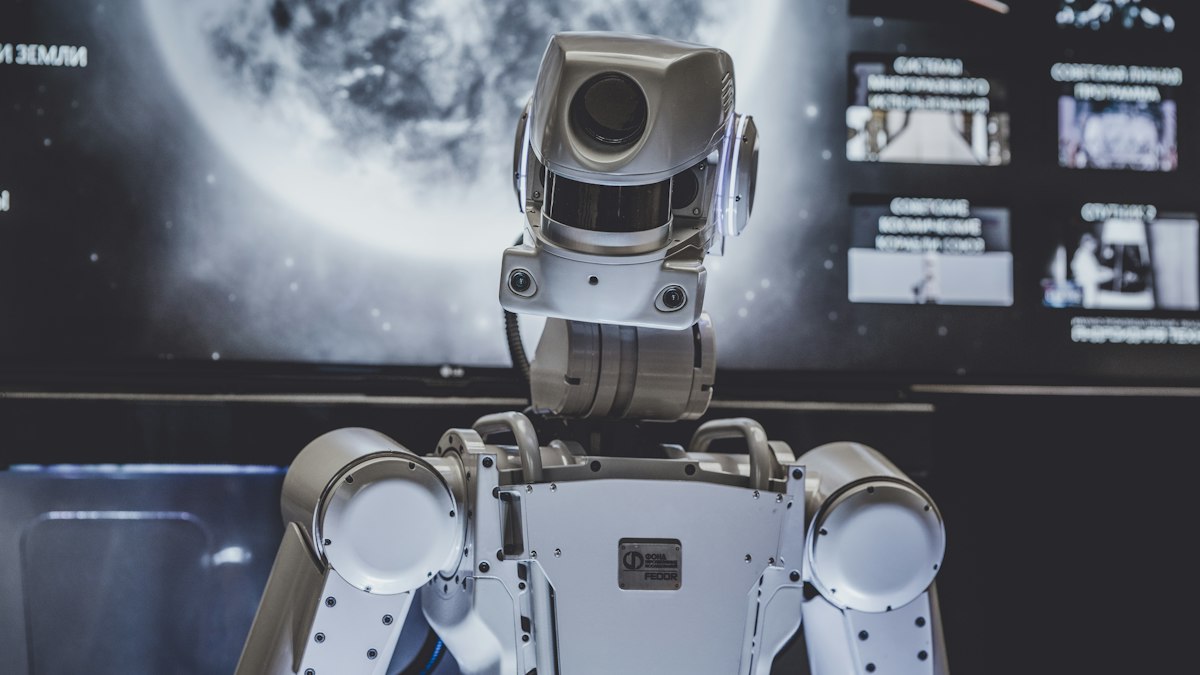
The artificial intelligence revolution is undergoing a fundamental architectural shift. After years of cloud-dependent AI services, 2026 marks the inflection point where meaningful AI computation happens on-device: on your laptop, smartphone, tablet, and increasingly specialized edge AI hardware.
This shift creates a portable power challenge that's reshaping how we think about mobile computing infrastructure.
The Edge AI Explosion
Edge AI refers to artificial intelligence models running locally on devices rather than in remote data centers. The advantages are compelling: zero latency for real-time applications, complete privacy for sensitive data, offline capability, and elimination of bandwidth costs.
Recent breakthroughs in model optimization (quantization, pruning, knowledge distillation) enable large language models and computer vision systems to run on hardware once considered inadequate for AI workloads. A modern laptop can now execute tasks that required cloud GPU clusters just three years ago.
The Numbers: Edge AI device shipments are projected to reach 2.3 billion units in 2026, up from 850 million in 2024. The market is expanding at 63% CAGR.
But this computational capability comes at a cost: power consumption. Running AI models locally is dramatically more power-intensive than simply streaming results from a cloud service.
Understanding AI Power Demands
Consider a typical edge AI workload: running a local LLM for content generation, code assistance, or document analysis.
A high-performance laptop running an optimized 7B parameter language model consumes approximately 45-65W during active inference, compared to 15-25W for conventional productivity tasks. Sustained AI workloads can drain a 60Wh laptop battery in 60-90 minutes versus 3-4 hours for traditional use.
Specialized edge AI devices draw even more power. Mini PCs optimized for AI inference consume 65-120W under load. Edge AI servers supporting multiple concurrent inference tasks can exceed 300W sustained draw.
The power challenge extends beyond consumption to thermal management. AI inference generates significant heat, requiring active cooling that draws additional power and reduces battery runtime. The cycle compounds: running AI drains the battery faster while simultaneously making the device less efficient at managing that power.
Reality Check: Running local AI models on battery power cuts typical laptop runtime by 50-70% compared to conventional workloads. This fundamentally changes mobile computing expectations.
Where GaN and SiC Technology Enter
Gallium Nitride (GaN) and Silicon Carbide (SiC) charging technology emerged as the solution to edge AI's portable power demands. These advanced semiconductor materials enable chargers that are smaller, lighter, more efficient, and capable of higher power delivery than conventional silicon-based designs.
GaN chargers achieve 95-98% conversion efficiency compared to 85-90% for traditional silicon chargers. This means less energy lost as heat and faster charging with less thermal stress on batteries.
More importantly, GaN technology enables compact, high-wattage chargers. A 140W GaN charger fits in a pocket and weighs 200 grams. An equivalent silicon charger would be 3x larger and heavier, making portable high-performance computing impractical.
The specification landscape shifted in 2026:
100W+ became standard: Laptops capable of sustained edge AI workloads require 100-140W power delivery. GaN chargers made this portable.
Multi-port charging normalized: A single GaN charger can simultaneously power a laptop (100W), tablet (30W), and smartphone (20W) from a package smaller than a traditional 65W brick.
USB-C Power Delivery 3.1 reached mainstream adoption: The Extended Power Range (EPR) specification supporting up to 240W enabled truly desktop-replacement portable workstations.
Efficiency Gains: GaN chargers waste 5-15W less energy as heat compared to equivalent silicon designs. Over a year of daily use, that's 2-5 kWh of savings and significantly less thermal stress on batteries.
The Portable Power Station Response
For edge AI professionals working off-grid (content creators, researchers, digital nomads, field engineers), GaN chargers solve only part of the equation. You still need power to charge from.
This is where portable power stations evolved to meet edge AI demands:
Higher inverter capacity: Modern portable power stations like VoltPak's VP8000H deliver 3,600W peak output, sufficient to simultaneously power multiple edge AI workstations, monitors, lighting, and peripherals.
Pass-through charging optimization: The ability to simultaneously charge the station while powering devices became critical. Edge AI workloads are sustained rather than intermittent, requiring continuous power availability.
Solar integration efficiency: GaN technology appears in portable power station solar input controllers, enabling faster, more efficient solar harvesting that matches the consumption patterns of edge AI workloads.
Intelligent power management: Battery management systems adapted to handle the sustained high-draw patterns characteristic of edge AI versus the intermittent loads of traditional mobile computing.
Real-World Edge AI + Portable Power Scenarios
The intersection of edge AI and portable power enables use cases previously impractical:
Remote Content Creation
A video editor working from a van equipped with a portable power station can run AI-powered editing tools (color grading, upscaling, noise reduction) that previously required desktop workstations. The portable power station provides sustained 200-300W to power a high-performance laptop, 4K monitor, and external storage while simultaneously charging from roof-mounted solar panels.
Total system draw: 280W continuous. Runtime on a 3,000Wh portable power station: 8-10 hours of productive work.
Field Research and Data Analysis
Scientists conducting field research deploy edge AI for real-time data analysis, species identification, sensor fusion, and environmental modeling. Portable power stations enable multi-day deployments with solar charging, supporting AI inference workloads that would be impossible with laptop batteries alone.
A typical field station setup: edge AI mini PC (80W), satellite internet (40W), sensor array (30W), charging infrastructure (50W). Total: 200W sustained draw supported by portable power station with solar input.
Mobile Professional Workspaces
The rise of "anywhere work" pushed professionals to seek flexibility beyond coffee shops and co-working spaces. Edge AI-powered workflows (document analysis, code generation, design tools) require performance previously locked to office desks.
A portable power station transforms a car, park, or beach into a viable workspace. Sustained power delivery supports high-performance computing for 6-8 hour workdays, with overnight recharging from standard outlets or solar panels.
Power Budget Example: High-performance laptop (100W) + external monitor (30W) + desk accessories (20W) + charging overhead (30W) = 180W total. A 2,000Wh portable power station provides 9-11 hours runtime.
VoltPak's Edge AI Power Strategy
At VoltPak, we design portable power solutions with edge AI workloads as a core use case. The VP8000H's specifications directly address the sustained high-draw requirements of AI-powered mobile computing:
3,600W peak output: Supports multiple edge AI devices simultaneously, including high-power workstations, GPUs, and peripherals.
LiFePO4 chemistry: Optimized for the sustained discharge patterns characteristic of edge AI workloads, with 6,000+ cycle lifespan that outlasts the devices it powers.
Advanced battery management: Intelligent load balancing and thermal management prevent throttling during sustained high-power draws.
Modular expandability: Additional battery modules scale capacity to match specific edge AI deployment requirements, from mobile professional setups to field research stations.
The synergy between edge AI and portable power is fundamental: edge AI makes mobile computing more capable but more power-hungry. Portable power stations make that capability practical outside traditional infrastructure.
The Technical Evolution
The edge AI portable power landscape continues evolving rapidly across multiple dimensions:
Neural Processing Units (NPUs)
Dedicated AI accelerators in laptops and edge devices improve performance-per-watt metrics. Apple's M-series chips, Qualcomm's Snapdragon X Elite, and Intel's Meteor Lake processors include NPUs that deliver 10-40 TOPS (trillion operations per second) while consuming 5-15W versus 45-65W for CPU-based AI inference.
This efficiency gain extends battery runtime and reduces cooling requirements, making portable AI more practical. But it also enables more AI usage, often resulting in net power consumption increases as users adopt AI-augmented workflows.
Battery Technology Improvements
LiFePO4 chemistry provides excellent cycle life and thermal stability for portable power stations. Emerging solid-state batteries promise higher energy density, enabling lighter, more compact portable power solutions for edge AI applications.
Software Optimization
Model quantization, efficient inference engines, and intelligent task scheduling reduce AI power consumption at the software layer. Frameworks like ONNX Runtime, TensorFlow Lite, and llama.cpp optimize model execution for edge devices, improving performance-per-watt by 2-4x compared to naive implementations.
Grid Integration
Portable power stations increasingly function as home energy storage systems, charging during off-peak hours and powering edge AI workloads during peak pricing periods. This grid arbitrage reduces operational costs for AI-heavy users while providing backup power capability.
Choosing Portable Power for Edge AI
If you're building an edge AI workflow and evaluating portable power solutions, consider these factors:
Power Budget Analysis
Calculate your sustained power draw across all devices. Edge AI workloads typically require 150-400W continuous depending on hardware configuration. Add 20-30% headroom for charging efficiency and peak loads.
Runtime Requirements
Determine how long you need to operate without recharging. Multiply your sustained power draw by desired runtime hours to establish minimum capacity requirements. A 300W sustained draw for 8 hours requires at least 2,400Wh capacity (plus efficiency losses).
Charging Infrastructure
Evaluate your charging options: AC outlets, solar panels, vehicle charging, or grid integration. Match portable power station input capabilities to your charging infrastructure. Solar input becomes critical for multi-day off-grid deployments.
Expandability
Edge AI workflows tend to grow over time. Modular systems that support additional battery capacity avoid premature obsolescence as your power requirements increase.
VoltPak Advantage: Our modular architecture enables capacity scaling from 3,072Wh to 24,576Wh+ using standardized battery modules, growing with your edge AI infrastructure needs.
The Convergence Opportunity
Edge AI and portable power represent a rare convergence: a technology shift (on-device AI) creating demand for infrastructure (portable power) that enables entirely new use cases (mobile AI-powered workflows).
This isn't about replacing existing solutions. It's about enabling capabilities that weren't previously possible: running computationally intensive AI tasks away from traditional infrastructure, processing sensitive data locally while maintaining privacy, achieving real-time responsiveness without cloud latency, and working effectively anywhere, not just anywhere with reliable internet and power.
The professionals and organizations that recognize this convergence early gain competitive advantages: content creators producing higher-quality work from previously impossible locations, researchers conducting field analyses that would require laboratory facilities, businesses maintaining operations during infrastructure disruptions, and individuals achieving genuine location independence for knowledge work.
Looking Ahead
The trajectory is clear: AI computation continues moving to the edge, devices become more capable and power-hungry, and portable power infrastructure evolves to support these new workloads.
By 2028, industry analysts project that 60% of AI inference will happen on-device rather than in the cloud. This represents billions of edge AI devices consuming tens of gigawatts of additional power. Much of that power will come from portable power stations, home energy storage systems, and distributed generation.
At VoltPak, we're engineering for this future. Not because it's inevitable (though it is), but because it aligns with our core mission: enabling energy independence. Edge AI makes that mission more relevant, not less.
The Bottom Line: Edge AI and portable power aren't separate trends. They're complementary technologies that together enable the next evolution of mobile computing: AI-powered workflows unconstrained by traditional infrastructure.
Your Edge AI Power Strategy
Whether you're a content creator, developer, researcher, or professional exploring edge AI capabilities, your power infrastructure matters as much as your compute infrastructure.
Start by understanding your power budget. Measure actual consumption during representative AI workloads. Add headroom for growth. Choose portable power solutions designed for sustained high-draw applications rather than intermittent loads.
Invest in GaN charging technology. The efficiency gains and compact form factors directly improve mobile computing practicality.
Consider solar integration if you work off-grid regularly. Modern portable power stations with MPPT solar controllers efficiently harvest renewable energy that offsets edge AI power demands.
Plan for expansion. Edge AI capabilities grow rapidly. Modular systems that scale with your requirements provide better long-term value than fixed-capacity solutions.
The edge AI revolution is here. The power infrastructure to support it exists today. The combination enables mobile computing capabilities that were science fiction just five years ago.
At VoltPak, we're excited to power this future.
Related reading: local AI computing power demands and sizing a power station for home backup.