
Electric Vehicles
Your Electric Car Is Now a Power Bank: The Bidirectional Charging Revolution
Vehicle-to-grid, vehicle-to-home, and vehicle-to-load technology is turning EVs into mobile power stations. Here's how the 60-130kWh battery in your driveway changes everything about portable power.
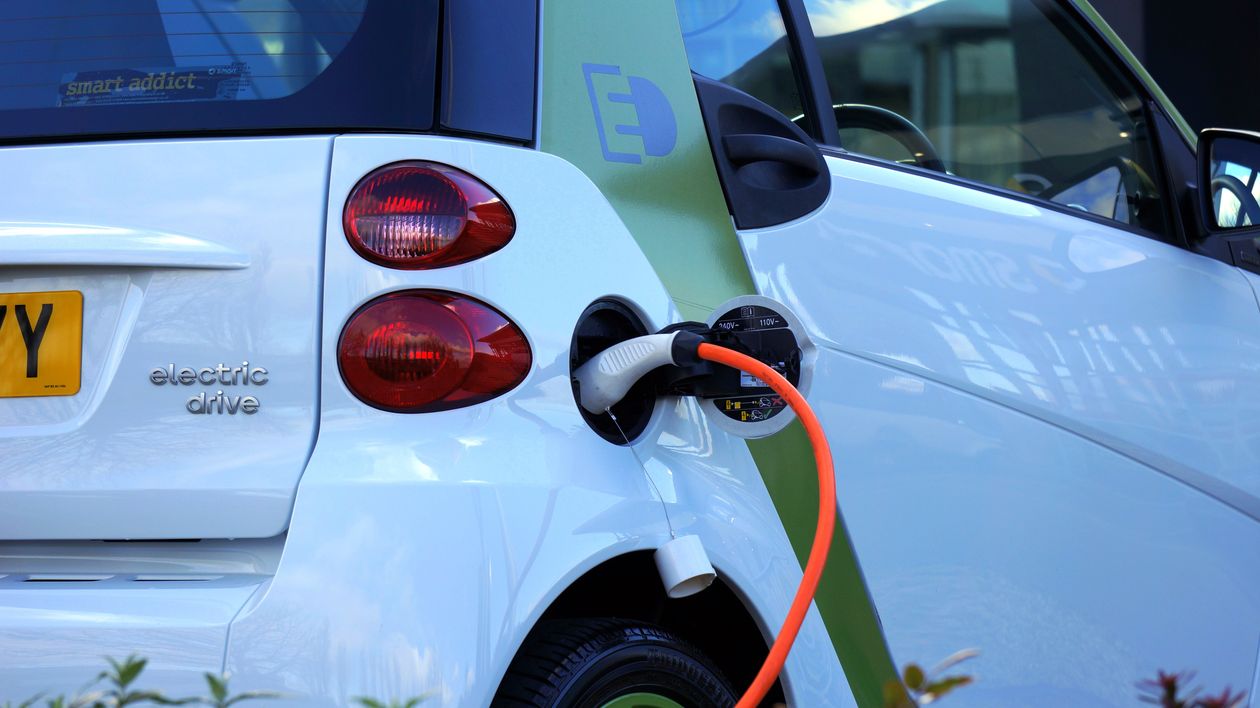
The electric vehicle parked in your driveway isn't just transportation anymore. It's a 60 to 130 kilowatt-hour battery on wheels that can power your home during an outage, sell electricity back to the grid for profit, or charge your laptop at a campsite miles from any outlet.
Bidirectional charging is the most transformative capability to reach the EV market in 2026. It converts every compatible electric vehicle into a mobile power station that fundamentally changes how we think about portable energy. And the implications extend far beyond the automotive industry.
Three Flavors of Bidirectional Power
The terminology can be confusing, so let's break it down. There are three distinct bidirectional charging modes, each serving different use cases:
Vehicle-to-Grid (V2G) feeds power from your EV back into the electrical grid. During peak demand hours when electricity is expensive, your car sells stored energy to the utility, then recharges overnight when rates are cheap. This turns every EV into a distributed grid stabilization asset and creates genuine income opportunities for owners.
Vehicle-to-Home (V2H) uses your EV as backup power for your house. When the grid goes down, whether from storms, wildfires, or infrastructure failures, your vehicle keeps the lights on, the refrigerator running, and critical medical devices powered. A Ford F-150 Lightning with a 131kWh battery can power an average American home for three days.
Vehicle-to-Load (V2L) is simpler: your car becomes a portable generator. Standard AC outlets in the vehicle or through an external adapter let you power tools, camping equipment, outdoor events, or emergency response gear. It's the camping generator that happens to also be your daily driver.
All three modes use the same underlying technology, bidirectional power electronics that can push energy in both directions through the charging port. But the implementation, hardware requirements, and real-world value propositions differ significantly.
The Hardware Reality
Making bidirectional charging work requires coordination between three components: the vehicle, the charging equipment, and the grid connection.
On the vehicle side, the onboard charger must support bidirectional power flow. Most EVs built before 2025 can only accept charge, not deliver it. The newer models launching this year include bidirectional inverters as standard or optional equipment, with typical output power ranging from 3.3kW to 19kW depending on the model.
The Ford F-150 Lightning leads with 9.6kW bidirectional capability. The Hyundai Ioniq 5 and 6 offer 3.6kW V2L through a standard adapter. The Chevrolet Silverado EV pushes 10.2kW. Tesla has been notably absent from this space, with no bidirectional support in current production vehicles despite repeated customer requests.
The charging equipment determines what's possible. V2L is straightforward: you need a vehicle with the capability and a basic adapter, which typically runs 3,000 to $8,000 installed, including the bidirectional charger, transfer switch, and integration with your home's electrical panel.
V2G is the most complex because it requires utility participation. You need a V2G-compatible charger ($4,000-10,000), a utility that supports bidirectional programs, and enrollment in a specific tariff structure that enables energy sales back to the grid. Only a handful of utilities in the United States currently offer this, though adoption is accelerating.
The grid connection varies by region. Some utilities actively encourage V2G through favorable rates and dedicated programs. Others prohibit it entirely through outdated interconnection agreements. Some simply haven't caught up yet and operate in regulatory gray zones where bidirectional feeding isn't explicitly allowed or forbidden.
This creates a patchwork implementation landscape where your zip code determines whether bidirectional charging is a real option or just theoretical.
The Math Behind V2G
Here's where bidirectional charging gets interesting from an economics perspective. The arbitrage opportunity is real and measurable.
Electricity pricing varies dramatically throughout the day. In California, time-of-use rates can swing from 0.50 or more during summer peak hours. In Texas, wholesale prices occasionally spike to over $5 per kWh during extreme demand events.
A vehicle with 60kWh of usable battery capacity participating in V2G could theoretically capture this price differential. Charge overnight at 0.50 per kWh, and the gross profit is $21 per cycle before accounting for efficiency losses and battery degradation.
Run that cycle five times per week (weekdays only), and annual gross revenue approaches 3,000 to $4,000 annually.
That's not enough to make V2G the sole reason to buy an EV, but it's meaningful supplemental income that helps offset ownership costs. More importantly, it turns an otherwise idle asset (a parked car) into productive infrastructure.
The catch: battery degradation. Every charge cycle reduces battery lifespan slightly. Vehicle manufacturers vary in how they handle V2G in warranty terms. Some explicitly cover it with no impact on battery warranty. Others add restrictions or reduced coverage. Read the fine print carefully before committing to aggressive V2G participation.
V2H: The Outage Insurance
The economic case for V2H is harder to quantify but often more compelling emotionally. How much is it worth to keep your home powered during a blackout?
For most people, occasional grid outages are inconveniences. Spoiled food, uncomfortable temperatures, missed work, entertainment disruption. These add up to hundreds of dollars per event but don't justify a $10,000 backup system on their own.
For others, backup power is critical. Home medical equipment, telecommuting requirements, operating a home business, caring for vulnerable family members, living in regions with frequent extreme weather events. The cost of losing power isn't just inconvenience, it's genuine hardship or danger.
V2H competes directly with traditional backup solutions: portable generators (5,000-15,000 installed), or home battery systems like Tesla Powerwall ($12,000-18,000 per unit).
The V2H advantage is that you're leveraging a battery you already purchased for a different primary purpose (transportation). The incremental cost is just the home integration hardware, not the entire energy storage system. A 15,000 to $30,000 as a standalone battery system.
The disadvantage is that it only works when the vehicle is home. If you commute daily and park at work during the most likely outage windows (daytime storms, heat-driven grid strain), your expensive backup system is 30 miles away, plugged into nothing.
This makes V2H most practical for households with multiple vehicles where at least one stays home most of the time, or for people with flexible schedules who can choose to keep the vehicle home when weather warnings suggest potential outages.
V2L: The Practical One
Vehicle-to-load is the mode that requires the least infrastructure and delivers the most immediate practical value. It's also the most widely available: many EVs shipping in 2026 include V2L capability even if they don't support V2H or V2G.
The use cases are straightforward and universally applicable:
Construction and field work: Power tools at remote job sites without lugging a generator. A single EV with 10kW V2L output can run a full crew's worth of equipment for a day.
Outdoor recreation: Camping, tailgating, outdoor events, anywhere you want AC power away from buildings. An EV beats a noisy generator hands down for overnight comfort.
Emergency response: After disasters when the grid is down but roads are passable, EVs become mobile charging stations and power sources for relief equipment.
Content creation: Outdoor photography and videography often requires powering lights, monitors, laptops, and charging gear far from outlets.
The power available through V2L varies by model but typically ranges from 1.5kW (enough for small electronics and lights) to 10kW (enough for power tools and multiple devices simultaneously). Some vehicles provide standard household AC outlets built into the cargo area. Others require an external adapter that plugs into the charging port.
What makes V2L compelling is that it replaces a separate tool (portable generator or large power bank) with functionality embedded in something you already own. The marginal cost is near zero if it's a standard vehicle feature, or a few hundred dollars for an adapter if it's optional.
It's also the mode with the fewest regulatory complications. You're not interconnecting with the grid or your home's electrical system. You're just using your car as a big battery with an AC outlet. No permits, no utility coordination, no special electrical work.
Impact on the Portable Power Landscape
Bidirectional EV charging isn't just an automotive technology. It's a disruption to the entire portable power and energy storage industry.
Consider the traditional market segments:
Portable power stations in the 1,000 to 3,000 watt-hour range sell for 2,500 and serve campers, emergency preparedness, and off-grid power needs. A single EV with V2L capability delivers 60,000 to 130,000 watt-hours, roughly 30 to 100 times the capacity for power needs you're already meeting with vehicle ownership.
Home backup generators are common in regions with unreliable grids. Standby whole-home systems run 20,000 installed. V2H provides comparable capability for a fraction of the cost, with the added benefit of being usable for transportation 99% of the time.
Grid stabilization assets traditionally come in the form of utility-scale battery installations or demand response programs. V2G aggregates thousands of distributed EV batteries into a virtual power plant that utilities can dispatch for peak shaving and frequency regulation.
The implication: as EV adoption scales over the next decade, the addressable market for standalone portable power and backup generation shrinks. Why buy a 10,000 standby generator when V2H offers the same protection at half the cost?
This doesn't eliminate the market for portable power, but it changes who needs it. People without EVs, obviously. People who need portable power independent of their vehicle location. People who need specific capabilities that V2L doesn't provide, such as ultra-compact form factors or specialized connectors.
The shift also creates opportunities. Integration products that bridge EVs to existing infrastructure. Smart load management systems that coordinate between vehicle batteries, home usage, and grid conditions. Adapters and accessories that extend V2L functionality.
What This Means for Energy Independence
The bigger picture is about resilience and distributed energy resources. Every bidirectional EV is another node in a more resilient electrical grid.
Traditional grid architecture is centralized: large power plants generate electricity, transmission lines carry it long distances, and distribution networks deliver it to end users. This works well under normal conditions but creates fragility. A storm takes down transmission lines and thousands of homes lose power for days.
Bidirectional EVs enable a different model: distributed energy storage that can island sections of the grid, support local loads during outages, and provide ancillary services that stabilize frequency and voltage. This isn't theoretical. It's happening now in pilot programs across Europe, California, Texas, and Australia.
The vision is a grid where energy flows in multiple directions, where every parked EV is potential backup capacity, where demand response is automatic rather than manual, and where individuals participate in grid operations not as passive consumers but as active providers.
For VoltPak, this represents both challenge and opportunity. Our core mission is making portable power accessible, reliable, and intelligently sized to real needs. Bidirectional EVs change the portable power landscape by integrating massive battery capacity into a device people already own for other reasons.
But they don't eliminate the need for purpose-built portable power. They create new integration opportunities, new use cases where vehicle batteries complement rather than replace dedicated power storage, and new customer education needs around how to think about energy holistically.
The households buying 100kWh worth of EV battery capacity still need power banks for personal electronics. Still need home energy storage that doesn't drive away every morning. Still need portable power solutions that weigh grams rather than tons.
The integration point is intelligence: systems that understand where power is stored (vehicle, home battery, portable units), where it's needed (grid, home loads, personal devices), and how to route it optimally based on price signals, outage risks, and usage patterns.
The Path Forward
Bidirectional charging is rolling out unevenly, constrained by vehicle availability, charging infrastructure deployment, utility participation, and regulatory frameworks that lag technology.
2026 is the inflection point. We're past the concept phase and into commercial deployment. Dozens of vehicle models now support at least V2L, with V2H becoming standard on many new releases. Charging equipment is more available and less expensive than two years ago. Early adopters are proving the economics work in real-world conditions.
The next phase is mass-market adoption. That happens when bidirectional becomes standard rather than optional, when installation costs drop below psychological thresholds (probably $2,000 for V2H systems), and when utilities create programs that make participation dead simple.
It also happens when people start thinking about their EV not as a car with a battery, but as a battery that happens to also move. That mental shift unlocks completely different conversations about energy, resilience, and what "portable power" actually means.
Because a 100kWh battery on wheels is the ultimate portable power station. It's infrastructure that travels with you. And that's a category that didn't exist five years ago.
Related reading: sizing a power station for home backup and why we chose LFP.